Showing posts with label bodhicitta. Show all posts

Monday, May 25, 2020

Vimalakirti's Sick Room - A Bodhisattva's Contemplations on Illness, Compassion, and Wisdom

Vimalakīrti's Sick Room


"Because all living beings are subject to illness, I am ill as well.
When all living beings are no longer ill, my illness will come to an end."

Vimalakīrti


We turn here to the Vimalakīrti Nirdeśa Sūtra, an early Mahāyāna Buddhist text with origins traceable to approximately 100 CE, shortly after the life of Jesus Christ. Its content orbits around the layman Vimalakīrti while on his deathbed, confined to a tiny sick room yet visited by countless beings who somehow manage to all squeeze inside, listening to him teach on subjects ranging from illusions to non-dualism and beyond. While obviously not following the guidelines of social distancing, the story of Vimalakīrti's sick room is still especially relevant to the present pandemic.

Illness and Compassion


The Vimalakīrti Nirdeśa Sūtra takes place primarily in a single space, a sick room occupied by the householder Vimalakīrti, who is described as a wealthy devotee. Vimalakīrti is depicted as entirely bed-bound, afflicted with illness, practically on the verge of death. While initially the exact nature of his illness remains unclear, Vimalakīrti later explains it through analogy to the existential unease afflicting sentient beings.

Because all living beings are subject to illness, I am ill as well. When all living beings are no longer ill, my illness will come to an end. Why? A Bodhisattva, because of (his vow to save) living beings, enters the realm of birth and death which is subject to illness; if they are all cured, the Bodhisattva will no longer be ill.

So long as we are subject to birth and death, we are subject to illness. A bodhisattva, an awakened being or a being in the process of awakening who willingly remains in the rounds of cyclic existence in order to liberate other beings, is only ill insofar as other beings remain ill. She vows to remain by their side, through sickness and health, and to assist them in awakening from the dream until all are free. Thus, Vimalakīrti remains bound to his sick room yet continues to teach living beings, millions of whom come to his bedside.


Illness is no impediment to the bodhisattva's continued service. In fact, in dialogue, a close, even causal association is drawn between compassion and illness.
Mañjuśrī asked: “What is the cause of a Bodhisattva’s illness?”
Vimalakīrti replied: “A Bodhisattva’s illness comes from (his) great compassion.”

Given this association, the bodhisattva path may seem undesirable for one's own good. If a bodhisattva's compassion leads to illness, then isn't that technically a form of self-harm? Indeed, we find in the modern era that compassion fatigue and burn-out increasingly afflict individuals in service-oriented professions, including healthcare, especially in light of the present pandemic. Out of compassion, they may put themselves in harm's way, risking their health and lives in order to care for the sick and ailing, occasionally succumbing to infection and dying as a result. While the bodhisattva does not flee from sickness and death, she must also exercise wise discernment while serving beings rather than recklessly throw herself into danger. Hence the appearance of Mañjuśrī, the bodhisattva of wisdom, in dialogue with Vimalakīrti.

Wisdom and Compassion


An essential coupling in much of Buddhism is that of wisdom and compassion. When wisdom is lacking, compassion is easily depleted as a result of its haphazard deployment. One may even lose life and limb in the process. When compassion is lacking, wisdom remains stale and lifeless. Occasionally understood by Buddhist practitioners as the two wings of a bird, wisdom and compassion are complementary qualities to be cultivated, especially on the bodhisattva path.

The choice to enter into the realm of sickness out of compassion must be tempered with wisdom in order to succeed in freeing beings. Compassion without wisdom would only perpetuate the cycle of illness, whereby both patient and doctor succumb to infection and die. Thus, the wisdom teachings of emptiness, as well as discernment in conduct, are invoked throughout the Vimalakīrti Nirdeśa Sūtra as a means of striking an appropriate balance. Although at a literal level, it may not seem that packing millions of beings into a tiny sick room is a medically wise or even compassionate course of action, Vimalakīrti clarifies that the illness he speaks of is metaphorical, a spiritual illness, which may be cured through contemplative practice. The beings in attendance manifest with ease, free of disease, in an entirely contemplative capacity.

While we pause here for the time being, we conclude with a brief reflection on the meaning and implications of bodhicitta, literally the mind of awakening. Such a mind is imbued with both wisdom and compassion, serving as the foundation for the bodhisattva's vows in service of all beings. As long as beings learn from the suffering that characterizes the present pandemic rather than attempting to mask its visceral reality, the seeds of bodhicitta may germinate for the freedom of all. For Vimalakīrti's confrontation with illness, bodhicitta informed by both wisdom and compassion was key.

Saturday, January 11, 2020

Dissolving the Source of Stagnation - Loosening the Ground of Sedimented Mindsets through Equalizing Self and Other

Dissolving the Source of Stagnation


If the seeds of compassion are already latent in the mind, what can be done to facilitate their germination, particularly when the possibility for growth seems to have stagnated? With escalating tensions across the globe, the need for a scalable, sustainable means of dissolving the source of stagnation and loosening the ground of sedimented mindsets is more urgent now than ever before.

What approaches to political and environmental crisis deserve further probing? A rather simple but by no means easy practice is that of exchanging oneself with others, a form of compassion meditation that dissolves the supposed boundaries between beings. It is exactly this dissolving of the source of stagnation, melting away the assumption of hierarchical separation, that contemplative practices grounded in compassion evoke, upsetting the status quo of indifference.

In the very same section on the perfection of meditation (dhyāna-pāramitā) from the Bodhisattvacaryāvatāra by Śāntideva that we recently addressed, we find a directly implementable approach to the process of dissolving the source of stagnation, erasing the supposed boundary between self and others.


Equalizing Self and Other


A simple maxim which seems to not have clicked for far too many throughout history is "treat others as you wish to be treated" and related variations on the same theme. The Golden Rule springs to mind. Based on what has become of the world, it would seem that most people wish to be treated rather poorly given how they appear to have treated others, but this can't be the case upon deeper probing.

The issues we face as a global community stem from a fundamental misunderstanding of the relationship between self and other, founded on a fundamental misunderstanding of the very meanings of self and other. These constructs aren't nearly as solid as they've been constructed to seem. Their supposed differentiation dissolves under the searing lens of scrutiny.

Selfish activity flares uncontrolled when one's own desires, many of which even hamper one's own wellness, are placed above the wellness of others. Extinguishing the fire of selfish activity requires conscious, ongoing efforts to cease fueling the process of hierarchical individuation at the expense of the collective. Śāntideva directly expounds a contemplative practice for dissolving this egocentricity through actively cultivating an awareness of the equality of oneself and others, complemented by the practice of equalizing self and other.


One should first earnestly meditate on the equality of oneself and others in this way: "All equally experience suffering and happiness, and I must protect them as I do myself."

Just as the body, which has many parts owing to its division into arms and so forth, should be protected as a whole, so should this entire world, which is differentiated and yet has the nature of the same suffering and happiness.

Although my suffering does not cause pain in other bodies, nevertheless that suffering is mine and is difficult to bear because of my attachment to myself.

Likewise, although I myself do not feel the suffering of another person, that suffering belongs to that person and is difficult to bear because of his attachment to himself.

I should eliminate the suffering of others because it is suffering, just like my own suffering. I should take care of others because they are sentient beings, just as I am a sentient being.

When happiness is equally dear to others and myself, then what is so special about me that I strive after happiness for myself alone?

When fear and suffering are equally abhorrent to others and myself, then what is so special about me that I protect myself but not others?

If I do not protect them because I am not afflicted by their suffering, why do I protect my body from the suffering of a future body, which is not my pain?

— Śāntideva, Bodhisattvacaryāvatāra
("The Perfection of Meditation," verses 90-97, trans. Wallace & Wallace)


Seeing others as oneself, how could we wish harm upon anyone? How could we fight? Their suffering is our own. Our happiness cannot come at their expense, as it seemingly does for the blissfully ignorant who live in a virtual reality filled with artificial pleasures, a simulated sense of "everything is fine" that never amounts to anything even remotely satisfactory in actuality, given that this feigned way of being necessitates severing the bond between beings to promote oneself and demote others. Snap out of it. All wish to be happy and avoid suffering. Why should we treat them any differently than we would treat the innocent, infant version of ourselves?

When bodhicitta takes root, one comprehends that one's own suffering and the suffering of others are equally suffering. When one wises up to the reality that the burning of various parts of the whole we call the ecosystem, both near and far, are equally damaging to the whole, then one no longer differentiates the parts in a hierarchical system of preference.

In the process of such cultivation of the equality of oneself and others, the notions of "self" and "other" no longer hold any substance. They're convenient terms and useful concepts, but only up to a point. When they are pitted against each other, as if my happiness had to come at the expense of yours so that you have to suffer, or that your happiness had to come at the expense of mine so that I have to suffer, then we have failed to understand things as they truly are.


Global Sustainability


We cannot solve the problems that plague us from within the same consciousness that created them. Such consciousness must be radically transformed, lest there be irrevocable disintegration into entropy. Equalizing self and other both through contemplative practice, regardless of religious tradition or lack thereof, and in everyday activities is one means of dissolving the hierarchy of separation.

Our quality of consciousness is intertwined with our actions in the world. Once priority is expanded from individual to the indivisible, from personal to transpersonal, from subjective to intersubjective, then we begin to see the reality of the suffering that equally threatens all. The next step is mass-scale ecosystem restoration, similar to how undertaking a medicinal regimen naturally follows upon realizing oneself to be profoundly sick.

Once the flames are doused and intention is re-oriented away from self-centered, egocentric activity and toward global sustainability, the restoration of an ecocentric system wherein all is equally "center" will be possible. Only then can scalable, sustainable solutions take effect.


To be continued...

Thursday, January 9, 2020

Cultivating Compassion - Roots Which Intertwine Through Blossoming of the Mind

Cultivating Compassion


The process of honing a mental quality, often via contemplative practice, is conveyed through the term "cultivation," which stems from the Sanskrit and Pāli bhāvanā, "bringing into being."

Such "bring into being" is similar to the birthing process or germination, but occurs in association with the mind. Citta-bhāvanā, literally "cultivating the mind," is the bringing-into-being of previously unarisen, perhaps latent qualities such as compassion. In the process of cultivation, such qualities, whether compassion or otherwise, are brought forth and made sustainable.

In a similar vein, bodhi (बोधि), which stands for awakening, is sometimes likened to a seed.

The mind of awakening, bodhicitta, is carefully and intentionally cultivated as one would cultivate a garden. Building upon our discussion of extinguishing the fires of selfish intention, we here till the soil of the mind in preparation for cultivating the seed of bodhi.

As an outgrowth of our recent discussion of the bodhisattva's path of practice through cultivation of bodhicitta, the mind of awakening, we delve into some of the nuances of such cultivation, with an emphasis on planting the roots of compassion, thereby treading lightly on earth with intention and care.


Blossoming of the Mind


While its Latin roots convey the meaning "to suffer together," compassion does no further damage, only healing damage already done. Rather than subject oneself to suffering for the sake of suffering or sacrificing one's well-being, a bodhicitta-informed compassion facilitates the recognition that the suffering of one is the suffering of all.

Such compassion is by no means an indulgence in additional suffering, subjecting oneself to another's suffering or taking a burden upon oneself that wasn't already there, but an admission of the inter-relationality already underlying all phenomena. Fires raging in the seeming distance, violence in far-off lands, are all much closer to home than we often wish to acknowledge. The reverberations resound in all directions, and although they may be felt at different times and in different degrees, they ultimately spare no one.


Tracing the roots of compassion to its seedling, we find a realistic and accessible path of practice unfold. In cultivating compassion, one brings the mind into full bloom — out of the closed-off, dark, cobweb-covered corner of its otherwise narrow frame of reference and into the open, into the light, into an expansive mode of relationality. Consider the following clarification for the meaning of bodhicitta in Tibetan.

The word for bodhicitta in Tibetan is sem kye. This literally means “the opening or blossoming of the mind.” It is the opposite of small mind, of self-preoccupation, self-contraction, and narrowness.

— Nyoshül Khenpo Rinpoche

This mind is the very ground one cultivates into an abundant garden, bursting into bloom as bodhicitta (बोधिचित्त), sem kye (སེམས་བསྐྱེད). The process of cultivating compassion unfolds in blossoming splendor, even among previously wilted flowers, lands and oceans marked with scars, communities torn asunder by conflict, so long as the seed of bodhicitta, the mind of awakening, is sustained.


Cultivating such bodhicitta is a radical undertaking, as the course of events has consistently pushed against it. In this sense, cultivating bodhicitta requires swimming against the current.

In order to change the course of collapse, whether in the climate, economy, or political structures that are in the process of collapsing, we need to change the course of our psychology and interrelational ecology, both the mindscape and the systems in which it is embedded, receiving and leaving imprints in cyclic fashion.

Roots Which Intertwine


For a future to be possible, there must be a mass reorientation from the unconscious mode of separation to conscious unification.

The mindset that perceives an individuated existence separate and cut off from its roots, this mindset that has uprooted its source of strength and thus dug itself into a barren ditch, cannot be the mindset that reverses the process.

Such a mindset itself must be reversed through bodhicitta, so that the hole that was dug is re-filled with soil and roots of compassion are regenerated. Such roots, which intertwine rhizomatically across all supposed boundaries, extend deep.


How, exactly, is bodhicitta cultivated? How is compassion to be sustained?

Tuesday, January 7, 2020

Extinguishing Fire - A Guide to the Bodhisattva's Way of Life


A Guide to the Bodhisattva's Way of Life


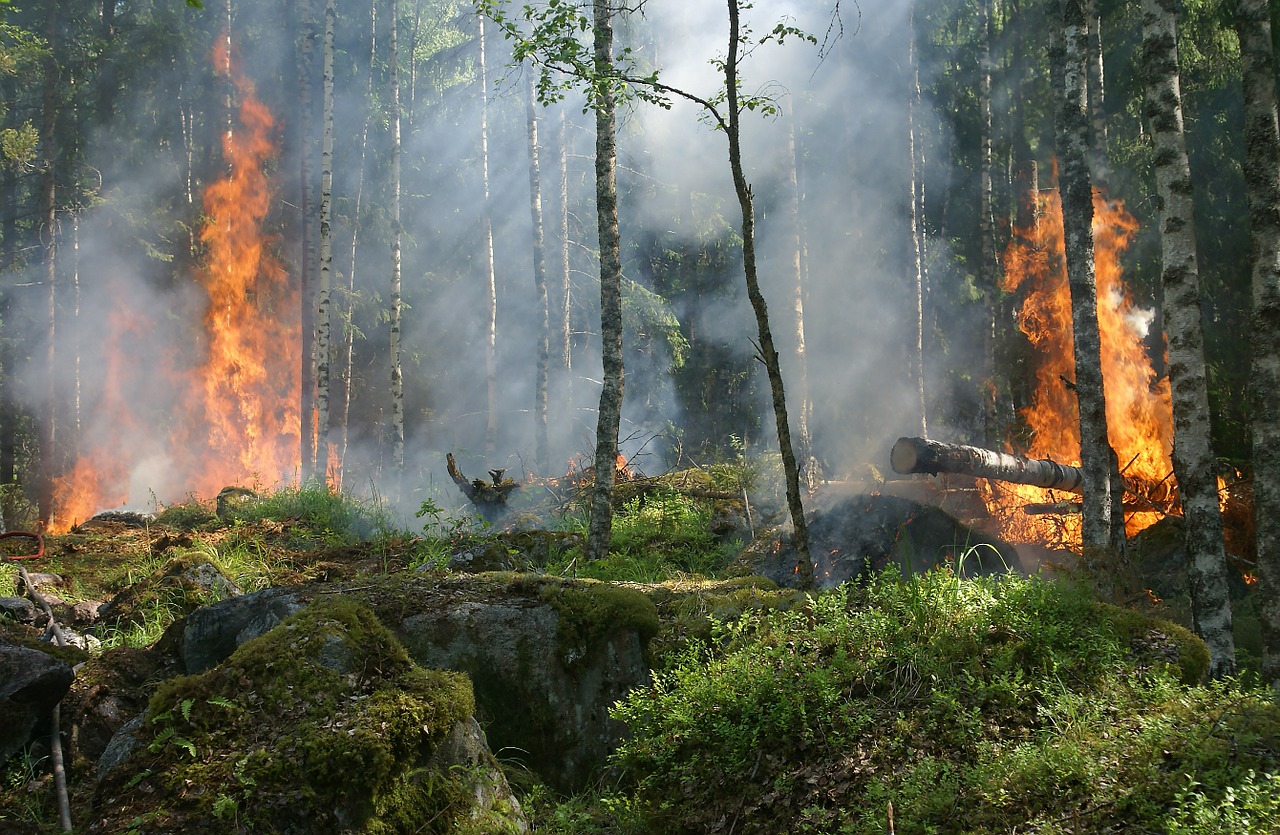
As one of the most consulted sources for the cultivation of compassion in Mahāyāna Buddhism, the Bodhisattvacaryāvatāra by Indian scholar-sage Śāntideva charts the path of practice undertaken by the bodhisattva — any being who is committed to awakening not for their own sake, but in service of all beings. In light of recent events both near and far, all of which play into the burning web of suffering in which all beings are embedded, such a path of practice is particularly relevant to dousing the flames.

The bodhisattva's path of practice is a way of life intentionally cultivated and embodied, not merely one of well-wishing from afar. In undertaking such training in compassion, one is moved to action, drawing near to the flames in order to extinguish them for good.

In undertaking such a path of practice, the bodhisattva, a being in the process of awakening, thus cultivates bodhicitta, the mind of awakening imbued with compassionate intention. Śāntideva's contemplative verses, as recorded in the Bodhisattvacaryāvatāra (i.e., A Guide to the Bodhisattva's Way of Life), develops this path of practice in stages, largely on the basis of extinguishing the fuel for the fire, the sense of a separate self. We offer here the beginnings of a series on cultivating compassion and extinguishing the flames.

Not Having Extinguished Self


Perhaps best known among Śāntideva's verses is a passage that reads, "The source of all misery in the world lies in thinking of oneself; The source of all happiness lies in thinking of others," a popular translation of verse 129 from the section on dhyāna-pāramitā ("the perfection of meditation") that circulates widely.

This segment traces itself to a triad of related verses that invoke fire imagery to convey the imminent dangers of self-centered modes and patterns.

Whatever calamities there are, and whatever sorrows and fears come to the world, they are all the result of attachment to “self.” Why is that attachment mine?

Not having extinguished “self,” one is not able to extinguish sorrow; just as one who has not extinguished a fire is not able to extinguish the burning.

It follows that for the sake of tranquilizing my own sorrow, and for the tranquilizing of the other’s sorrow, I give myself to others and I accept others like myself.

Such a sentiment of selflessness is echoed throughout much of the Buddhist canon, regardless of tradition, as well as various other spiritual and secular circles. Its underlying message is that selfish tendencies lead to suffering, while the inverse, particularly in the form of altruism, stands to promote flourishing in society.

Grounded in this understanding, the entire bodhisattva path is centered around such a philosophy of selfless service and the practice of extinguishing selfish habits. Not having extinguished "self," suffering arises. Nothing having extinguished "self," the world erupts into flames.


Fires Continue to Rage


With piercing language, invoking fire through simile, Śāntideva seers us with the burning reality that plagues much of the world, both literally and figuratively. While physical fire spreads across the planet, decimating all in its wake, the heat of violence and conflict seethes and ferments in its midst. These are by no means eruptions from out of the blue. The red has long been building.

The root of suffering is selfishness informed by ignorance and craving, which can be likened to a flame that takes only its own existence as essential, consuming all else in service of itself alone. Whether self-obsession or self-absorption, this fire feeds on the embers of greed, hatred, and delusion.

As fires continue to rage without pause, what can be done (or not done to cease adding fuel to the fire and fanning the flames) in order to counter their ferocity? Have all the options been exhausted, or...

To be continued.