Showing posts with label daoism. Show all posts

Monday, March 23, 2020

Without Words - The Dao De Jing on Non-Doing

"The softest thing in the universe
Overcomes the hardest thing in the universe.
That without substance can enter where there is no room.
Hence I know the value of non-action.
Teaching without words and work without doing
Are understood by very few."

Dao De Jing, Verse 43


Action and Non-Action


Amidst varied responses to the coronavirus outbreak, a whirlwind of stress has been stirred. With public health in jeopardy, many governments have chosen to mandate versions of "shelter in place" in a concerted effort to stop the spread of disease. As increasingly many people are confined to individual quarters, a sort of unintentional hermit-like existence may be on the rise, with the majority experiencing acute distress, boredom, cabin fever, and other sorts of unease. Craving activity and stimulation, we feel restless, stir crazy, particularly on edge.

Perhaps offering a reprieve from the storm of pandemic sweeping over communities near and far is the Dao De Jing, a Chinese classic attributed to the hermit-sage Lao Tzu (i.e., Laozi) dating to roughly the sixth century before the common era.

While the majority actively resists the hermit-life, viewing it with suspicion as a form of escapism or passive disengagement, only entering its realm reluctantly under lock-down and not even fully, given other means of escape such as various forms of media, at least a door has been cracked open. Under these conditions, we have the chance to turn inward and evaluate our habits of consumption, if we are willing. We therefore use this opportunity to briefly explore a Daoist hermit's reflections on action and non-action in relation to our present circumstances.

Doing


With so much chaos erupting around us amidst the COVID-19 crisis, we may naturally feel the urge to act, to do something to help. Many might feel guilty for doing nothing. Given a societally-ingrained push toward ceaseless action, we've been conditioned to constantly be on the go in one way or another. Daoist contemplative traditions, however, offer an alternative.


Throughout the Dao De Jing and other classics, a radically different perspective is depicted. As Lao Tzu reflects, "teaching without words and work without doing are understood by very few," illustrating a contemplative pivot. Those teachings conveyed without resorting to the limits of language, that work that flows without effortful action, are too often completely overlooked and neglected.

Non-doing


Non-doing flies in the face of everything taught to us by mainstream, industrialized societies and their obsession with productivity. How can anything be accomplished without actively doing something? Wu wei, a Chinese term of Confucian origin but of particular significance in Daoism, conveys multiple contemplative meanings, mostly centered around "non-doing," "inaction," "inexertion," or "effortless action." Here we find a mode of being that challenges the norms of productivity.


Much more than meets the eye transpires in the absence of obvious activity. Through non-doing, wu wei, we reduce the strain on the system. Whether by refraining from polluting the already declining environment or by refraining from putting our bodies in public spaces where we are likely to become vectors of disease transmission during this pandemic, non-doing goes a long way. "The softest thing in the universe," observes Lao Tzu, "Overcomes the hardest."

Undoing


"I know the value of non-action," reflects Lao Tzu. Such non-action, or effortless action of a kind other than those that attract the spotlight in our overwhelmingly consumerist society, enables us to un-do the damage already done. While certain scars cannot be erased, we can at least mitigate the effects of the climate crisis and COVID-19 crisis through reduction of our consumerist behaviors. Undoing the patterns of consumerist craving that characterize our conscious experience is the basis for regenerative undertakings.


While we pause here for the time being, this conversation is most certainly ongoing, evolving in real-time across the ever-changing terrain of the immediate present and onward. As a parting reflection, we note that just as meaningful forms of assistance need not be limited to activity, the notion of "social distancing" also reflects a major oversight. We may physically distance ourselves from each other for the sake of disease control, practicing "non-doing" as a means of reducing transmission, but that by no means necessitates social or emotional distance or escapism of any kind. We remain connected despite distance, engaged despite stillness, according to the Dao De Jing.

To be continued.

Source:

Feng, Gia-Fu and Jane English. Tao Te Ching (Daodejing). New York: Random House, Inc., 1973.

Wednesday, December 4, 2019

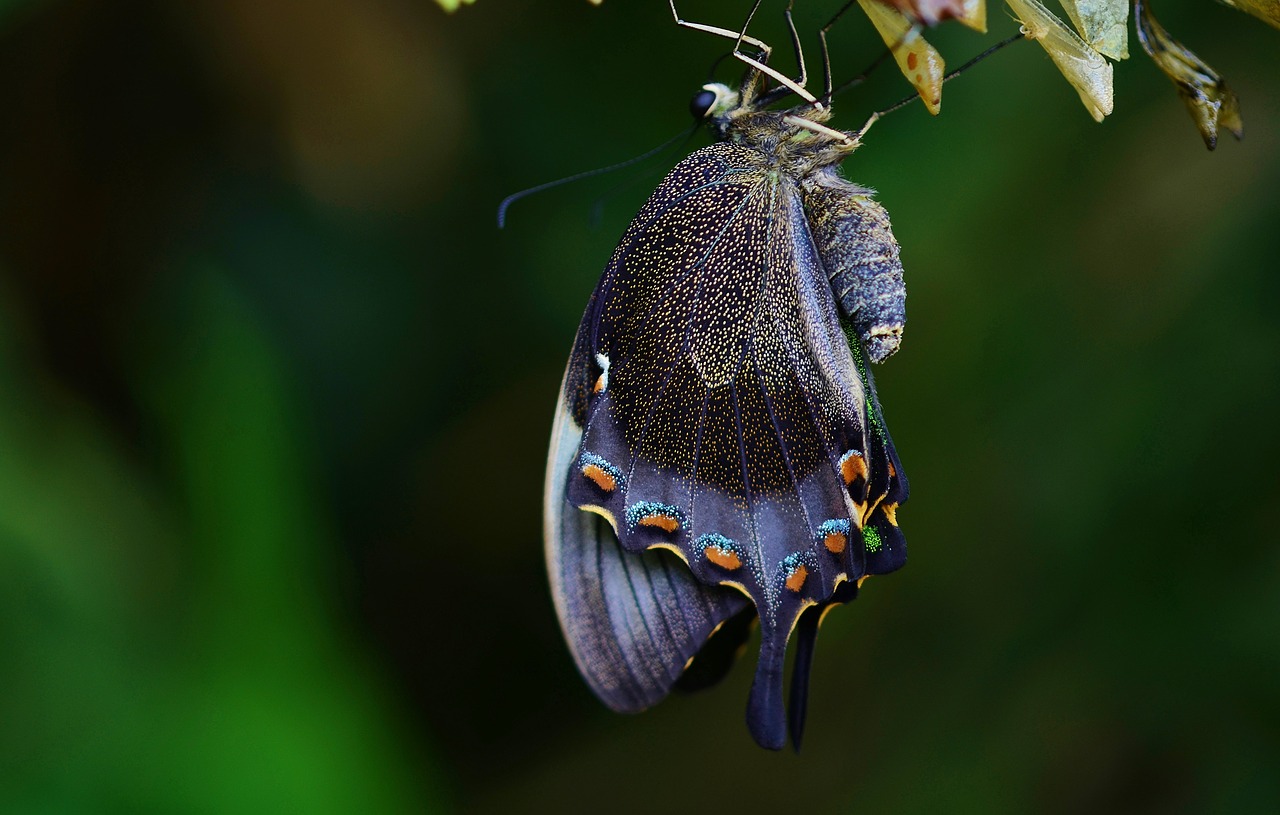
Zhuangzi's Butterfly Dream - Contemplating the Fluid Transformation of Things

Zhuangzi's Butterfly Dream ...


Perhaps you've heard this story, a dream within a dream attributed to the Daoist sage Zhuangzi, who lived in China in the fourth century BC(E). Zhuangzi's butterfly dream, as it's often called, is likely the most well-known of his writings.

A literary genius, contemplative ecologist, and master of the mind's musings, Zhuangzi's prose seamlessly weaves together vivid images from nature and philosophical reflections, amalgamating the meditative and the mystical. Zhuangzi's butterfly dream blends each of the qualities for which he is best regarded.

Here we dive into the dream with Zhuangzi and the butterfly, teasing apart its possible meanings, examining Zhuangzi's butterfly dream from within the dream itself. Please join us in these contemplations as we examine what it means to be awake within a dream.


Dreaming or Awake


Zhuangzi's butterfly dream sequence occurs in a section called "Discussion of the Equality of Things" (齊物論) within a larger collection of contemplative material. We can perhaps envision Zhuangzi waking from a dream and recording his recollections, meanwhile meditating on the question of whether he's still dreaming.

We offer here a translation of Zhuangzi's butterfly dream from the original Chinese, dating back nearly 2,500 years.

昔者莊周夢為蝴蝶,栩栩然蝴蝶也,自喻適志與,不知周也。俄然覺,則戚戚然周也。不知周之夢為蝴蝶與,蝴蝶之夢為周與?週與蝴蝶則必有分矣。此之謂物化。

Once, Zhuangzi dreamt he was a butterfly, so vividly a butterfly, following his every wish, not knowing he was Zhuangzi. Suddenly, he became aware, distressed, that he was Zhuangzi. He didn’t know whether he was Zhuangzi dreaming he was a butterfly or a butterfly dreaming he was Zhuangzi. There must be a difference, then, between Zhuangzi and the butterfly. This is to speak of the transformation of things.

Do you know whether you're dreaming or awake? Such an inquiry appears to cause Zhuangzi some existential anxiety. While most other translations don't account for this, the presence of the term 戚戚 suggests distress. It is a duplicate of the character 戚, which consists of the radicals (i.e., parts) for "younger brother" (尗) and "axe" (戈), translated either as "relative" if emphasizing the familial reference, or "sorrow" if emphasizing the death of a loved one through injury, a visceral possibility.

Perhaps Zhuangzi's reflections prompt us to ask the same painful question of our "reality," namely, is this a dream? While this may not evoke grief, pain, or existential anxiety for everyone, and in fact may be a stimulating philosophical reflection for others, there may nonetheless remain a deep sense of profound uncertainty in response to it. How would I know? Who even am I, this "I" who is asking?


Transformation of Things


Oddly, Zhuangzi's reflections end somewhat abruptly by referencing the "transformation of things" (物化). Immediately beforehand, the characters Zhuangzi and the butterfly are deemed separate or distinct, divided, different (分). No further explanation is given, although several interpretations can be derived.

Perhaps that which is supposedly separate is nonetheless capable of transforming in an instant into the same sort of being as me. Each is simultaneously distinct from others yet transforming, shape-shifting into other forms, morphing as would a caterpillar to chrysalis, then butterfly, cycle upon cycle. Dreaming and waking epitomize this ecological cycle, as do birth and death.

Possibly, Zhuangzi's butterfly dream may further allude to birth and death and the transformations undergone not only at these existentially salient points, but also in the interim.

Typically, often subconsciously, we might assume that we are selves of some sort, fixed entities, identities that persist across our lifespan and perhaps even into the afterlife. However, even on a moment by moment basis, we constantly change roles, shuffle between identities, fluctuate in our physiology and psychology, hence the "transformation of things" Zhuangzi references in his reflections, which applies equally on the individual level as it does ecologically. One moment a butterfly, the next Zhuangzi, he realizes the shape-shifting nature of beings and the minds that underlie them.


A distinction is also drawn between waking and dreaming, but perhaps for Zhuangzi, they are not all that different after all. Waking and dreaming are fluid states in a similar sense to how birth and death are fluid, not fixed demarcations of an activity or identity cut off from all else.

We ordinary beings tend to assume that what we call our "selves" either cease at death or persist in some post-mortem state, whether eternally in another land or until the next birth. Zhuangzi suggests these identities of ours are constantly shape-shifting, even during the course of a night's sleep as the mind plunges into the deepest of its transformations. Perhaps in waking up from one dream, Zhuangzi has entered another. A dream within a dream within a dream, he questions his experience of the world, which in turn shows him the transforming nature of his own mind.

There is nothing guaranteeing that the so-called reality we experience is fixed in any way. Instead, it has a fluid character allowing for transformation (化). Of paramount importance in this transformation is the mind that gives rise to our experience of so-called reality.

Lucidity


In the course of his reflections, Zhuangzi cultivates some degree of lucidity, a clarity of discernment that enables him to question whether he is still caught in a dream-web of his own spinning. Perhaps all we've ever tasted is the fabric of our own minds, a fabrication passed off as reality. Such a fabric, a tapestry, a web comprised of intersecting threads with some viscosity to them holds the potential to catch and confine the butterfly.

What does that mean for us? While Zhuangzi's reflections on the butterfly dream end here, we can perhaps continue the inquiry by asking, what can be done to free ourselves, the transforming butterfly, from the web-like illusion spun by the spider of our own minds?

We're certainly curious to hear your reflections on dreaming, waking, birth, death, and the transformation of things. Please feel free to leave us a comment below. Safe travels in all you do, whether dreaming or awake.

Friday, October 4, 2019

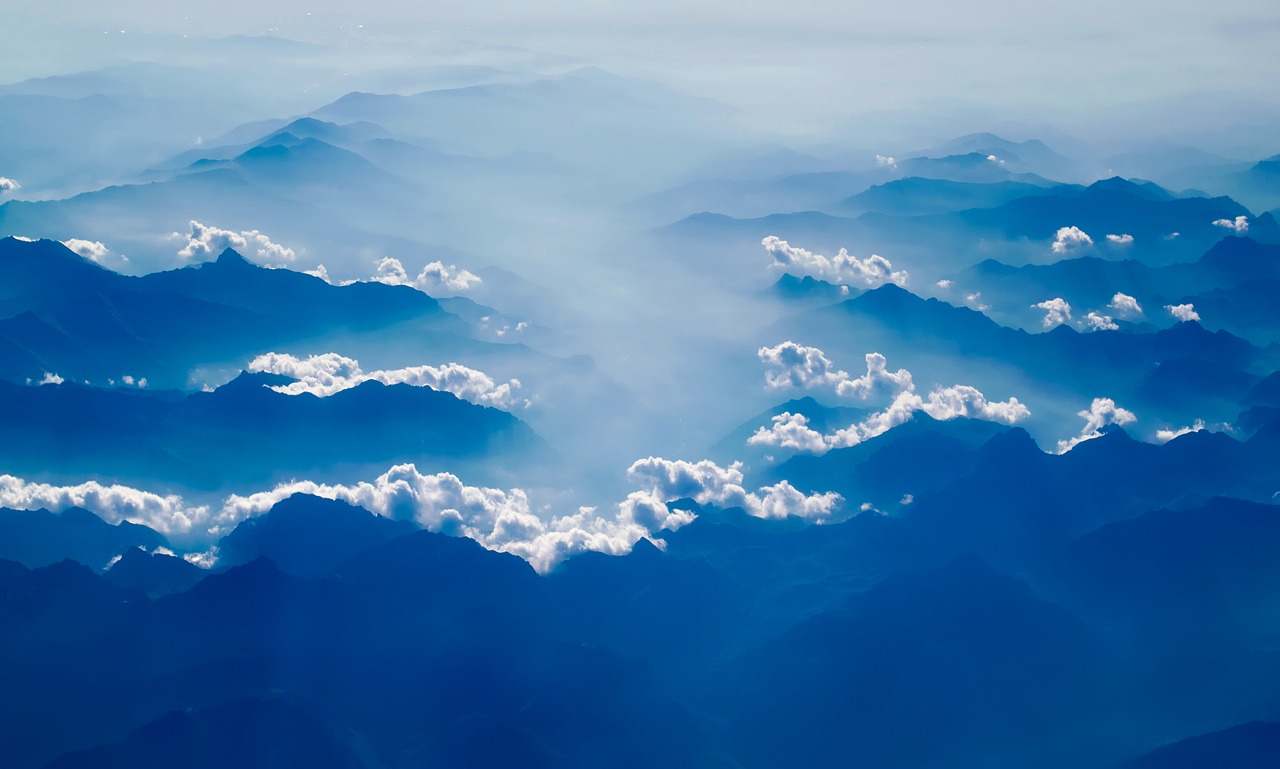
An Endless Trail - Ascending Cold Mountain to Sit Amongst White Clouds

Cold Mountain Path


A poem for contemplation:
"Clambering up the Cold Mountain path,
The Cold Mountain trail goes on and on:
The long gorge choked with scree and boulders,
The wide creek, the mist-blurred grass.
The moss is slippery, though there’s been no rain
The pine sings, but there’s no wind.
Who can leap the world’s ties
And sit with me among the white clouds?"
(Trans. Gary Snyder)
Hanshan, c. 700s (C.E.)


This poem by Hanshan (寒山), the "Cold Mountain" poet-recluse of Tang dynasty China whose recorded work spans Daoist and Chan (Zen) Buddhist realms, serves as an analogy of sorts for contemplative practice. Indeed, various traditions throughout history employ the metaphor of the "path" to convey the long and winding road of spiritual cultivation. Perhaps more saliently than anywhere else, such path-based imagery consistently weaves its way into East Asian literature and poetry.

Given the migratory nature and often uncertain trajectory of peoples of the past (and many of the present as well), the "path" came to symbolize the profound transformations undergone while in the constant process of going in nomadic transience. Such imagery of the nomad became especially prominent on the Silk Road, where cultures interfaced and contemplatives exchanged insights.

In Hanshan's poem, such traversal of the contemplative path is given a rugged depiction. The imagery of the first line — “clambering up the Cold Mountain path” — already tells of the path's arduous incline. Taking his pen-name from this very mountain, Hanshan ("Cold Mountain") clambers upward, using both hands and feet, perhaps mis-grasping or mis-stepping at several points, stumbling along the way while climbing the mountain's face.


Immediately, the reader can sense the challenge faced by the mountain-climber, whose journey is both literally and figuratively uphill. If undertaken sincerely, the contemplative path is initially an uphill journey, requiring strength in perseverance and stamina in order to progress and ascend. Obstacles fall upon us like rocks in an avalanche. Rather than completely smooth sailing, such mountaineering is often a bumpy ride replete with injury, leaving the aspirant with the feeling of “clambering up” a desolate, barren “Cold Mountain path.”


Endless Trail


Traversing the contemplative path is no easy feat. Adding to these challenges, the second line of Hanshan's poem suggests that the trail is limitless, reflecting how the contemplative path is without end, infinitely extending into the horizon. One question immediately arises, namely: How can a finite being ever reach the top of the mountain if the trail is infinite? Perhaps the poet may have a similar question at the beginning of his spiritual path. On an endless trail, is there any hope? Can one ever reach the top?

Perhaps the endless trail signifies that the path continuously unfolds without final destination. Attaching to a fixed end point is fruitless. Things don't always go according to plan. That doesn't make plans useless. Rather, one can make plans yet hold them lightly, adjusting for detours.


Perhaps the trail is so extensive that it contains no constrictions imposed by an ego whose tendency is to chart its progress, taking pride in its successes and shame in its failures. Both are equally part of the path yet without inherent substance. Bad day? Keep going. Good day? Keep going. While ascending the mountain, don't be fooled or blown about by these "worldly winds."

The trail may further symbolize humanity's unbounded nature, suggesting vastness of potential. Caution ahead: Rather than mistaking such an unbounded nature as inherently "me," such vastness hints at a dissolution of "self"-imposed boundaries. Tread carefully along this bend, a precariously perched pathway where the risk of falling is especially high. Medicinally, "not-self" (non-identification) opens new ways of navigating experienced reality. If we identify with our successes or failures, we risk getting tripped up on the ascent. If we realize that there is no ego-identity or separate self that exists apart from others and the world, nothing is perceived as an obstacle on the path.

Choked With Weeds


As the poem and path wear on, we find ourselves immersed in vivid references to nature. Take the middle lines, “The long gorge choked with scree and boulders... The wide creek, the mist-blurred grass. The moss is slippery, though there’s been no rain... The pine sings, but there’s no wind.”

When Hanshan describes the long gorge as being “choked with scree and boulders,” we are reminded of a poem by Tao Yuanming, another contemplative poet of China.

Similar to Hanshan yet referencing another sort of landscape, Tao Yuanming reflects, “My fields and gardens are choked with weeds,” perhaps suggesting that spiritual cultivation has long been neglected. Hanshan, however, references “scree and boulders,” painting an even more desolate, desert landscape. If there ever was a garden in its place, all life is now long-gone, leaving only barren wasteland in its wake.


Such barrenness reflects the cultivator's struggle in starting at ground zero, having absolutely no experience, not even the tiniest of seedlings to nurture. As any beginning gardener may reflect, there is immense difficulty in nourishing sprouts to maturity without the proper conditions.

In our own small-scale farming experience, during a period of absence, the farm where we had previously seen plants flourish and bear fruits instead fell into complete disarray, choked with its own form of “scree.” It took many weeks of labor to nurse it back to life.

Such imagery perhaps allows one to empathize with the cultivator who encounters “The long gorge choked with scree and boulders.”

Despite No Rain


The next lines lend a sense of hope and inspiration. Hanshan keenly observes, “The wide creek, the mist-blurred grass/ The moss is slippery, though there’s been no rain.” Suddenly, the landscape is enlivened.


When the path is abandoned, all that was previously cultivated wilts through neglect. Under drought, the creek narrows, grass grows jagged and loses its color, while moss dries out. The mountain trail grows stark and barren.

Yet here Hanshan characterizes the creek as wide, the grass as mist-blurred, and the moss as slippery. All seems just as alive as ever.


All of this, despite no rain. Relative to the beginning of the poem, which described a desolate mountainside, here a contrast is apparent.

Typically, when the land's resources are sapped, such beauty and potential appears to fade. When conditions degrade, it seems there's no hope. Yet if one acts soon enough, vitality may be recovered. The potential remains alive, only dormant.


Alternating between hope and fear, the line “The pine sings, but there’s no wind” reads as an eerie reference. If there is no wind blowing through it, then how does the pine sing? Where is the voice coming from? Perhaps this line functions as a sort of huatou, like the question, “Who recites the Buddha’s name?” or “Who drags this corpse around?” The contrast between “The pine sings” and “but there’s no wind” helps shake us free of dualistic thinking, thus preparing us for the final lines.

Amongst White Clouds


The concluding lines of this poem strike us the strongest. They feature in the opening scene to the film “Amongst White Clouds” documenting the contemplative paths undertaken by the Zhongnan Mountain hermits of China. Such lines convey the search for freedom from bondage by embarking upon the contemplative path.


In asking, “Who can leap the world’s ties/ And sit with me among the white clouds?” the poet invites his readers to contemplate if they are willing to undertake the arduous journey described in the earlier lines of the poem for the sake of ultimate liberation.


Despite all the toil it takes to ascend the mountain, despite the arduous nature of the path, despite the risk, the effort is worth it.


To have the company of a companion in the process allows for a collaborative journey that culminates in sitting together amongst white clouds. Such a collaborative undertaking makes the path easier to walk, the mountain easier to climb. Indeed, this is why we join together in community to support each other on the path. "Who can transcend this tiresome world...and sit with me amongst white clouds?"